
Jul 5, 2026
Criminal Appeal in the High Court: Procedure, Documents and Limitation Period (2026 Guide)
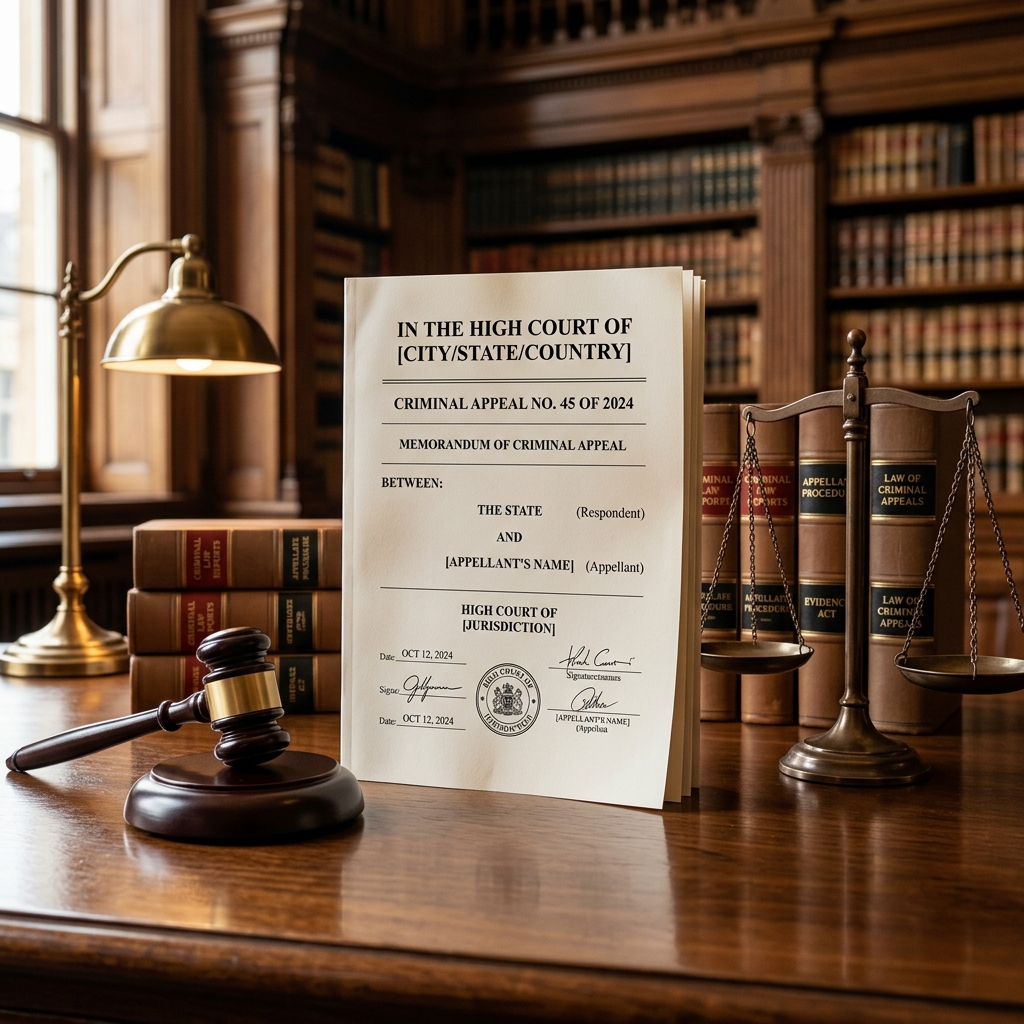
When a Sessions Court or Magistrate Court delivers an adverse judgment in a criminal case — whether it is a conviction, an enhanced sentence, or a refusal of bail — the aggrieved party has a statutory right to challenge that order before the High Court through a Criminal Appeal.
Filing a Criminal Appeal in the High Court requires precise legal drafting, adherence to strict limitation periods, and a thorough understanding of appellate procedure under the Bharatiya Nagarik Suraksha Sanhita (BNSS) / Code of Criminal Procedure (CrPC). Engaging a High Court Advocate in Delhi at the earliest stage is critical to preserving your appellate rights.
What Is a Criminal Appeal?
A Criminal Appeal is a statutory remedy that allows a person convicted by a lower court, or the State (in case of acquittal), to seek a review of the judgment, order, or sentence by a superior court. It is not a retrial but a re-examination of the legal and factual findings of the trial court.
Who Can File a Criminal Appeal in the High Court?
- Convicted Person: Any person convicted by a Sessions Court or Magistrate Court can file an appeal against conviction and/or sentence.
- State / Prosecution: The State can appeal against an acquittal or for enhancement of sentence.
- Victim / Complainant: Under Section 372 CrPC / Section 401 BNSS, victims have a right to file an appeal against acquittal or inadequate compensation.
Grounds for Filing a Criminal Appeal
- Error of law by the trial court
- Misappreciation or misreading of evidence
- Procedural irregularity or violation of natural justice
- Excessive or inadequate sentence
- Fresh evidence discovered after conviction
- Failure to consider material evidence
Limitation Period for Criminal Appeals
Strict time limits apply for filing criminal appeals:
- Appeal against conviction by Sessions Court: 30 days from the date of judgment (Section 389 BNSS / Section 374 CrPC).
- Appeal against conviction by Magistrate Court: 30 days from the date of sentence.
- State appeal against acquittal: 90 days from the date of the acquittal order.
- Appeal for enhancement of sentence: 90 days.
The High Court has discretion to condone delay if sufficient cause is shown, but timely filing is always advisable.
Step-by-Step Procedure for Filing a Criminal Appeal
Step 1: Obtain Certified Copy of the Judgment
Apply for and obtain a certified copy of the impugned judgment from the trial court registry. The limitation period begins from the date the judgment is pronounced.
Step 2: Draft the Memorandum of Appeal
The Memorandum of Appeal must contain specific grounds of appeal, a concise statement of facts, the relief sought, and references to relevant statutory provisions and precedents.
Step 3: Prepare the Paper Book
Compile the complete paper book including the FIR, charge sheet, statements of witnesses, trial court order, and all relevant documentary evidence.
Step 4: File the Appeal in the High Court Registry
Submit the appeal along with the prescribed court fee, vakalatnama, and supporting documents before the High Court registry within the limitation period.
Step 5: Application for Stay / Suspension of Sentence
Along with the appeal, the appellant may file an application for suspension of sentence and bail pending appeal under Section 389 CrPC / Section 396 BNSS.
Essential Documents Required
- Certified copy of the impugned judgment and order of sentence
- Copy of FIR and charge sheet
- Memorandum of Appeal with specific grounds
- Vakalatnama (authority to appear)
- Affidavit in support
- Court fee as prescribed under the Court Fees Act
Conclusion
A Criminal Appeal in the High Court is a critical appellate remedy that can overturn wrongful convictions, reduce excessive sentences, or secure bail pending trial. Timely filing within the prescribed limitation period and precise legal drafting are essential.
For assistance with criminal appeals before the Delhi High Court or any High Court across India, contact our chambers to schedule a consultation with a High Court Advocate.